
On-Site in Layton: Water Extraction for Wasatch Front Homes
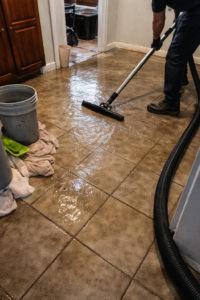
When a supply line bursts in a 1980s tri-level or spring runoff overwhelms a sump pump, the clock starts. Water doesn’t wait. We’ve seen it firsthand, from homes near Hill Air Force Base to new construction in West Layton. Upkeep Water Damage Restoration is a local Layton business, based at 2875 N Hill Field Rd #51, providing water damage restoration services in Layton focused entirely on water removal and structural drying for our neighbors in Davis County. We don’t just extract water; we address the specific ways water damage occurs here, from the valley floor to the benches of the Wasatch Front.
Our job isn’t just to show up with pumps. It’s to understand why your basement is flooded and ensure it doesn’t happen again.
From Snowmelt Floods in East Layton to Pipe Bursts near HAFB
Every call is different. A Category 1 clean water damage leak from a refrigerator icemaker line presents a different challenge than a Category 3 sewage backup. We document the source and contamination level immediately, following IICRC standards to determine the correct protocol.
A recent project in an East Layton home involved a clean water pipe burst in the basement. Though the water was sanitary (Category 1), it saturated the lower 18 inches of drywall and carpet. Our immediate goal was extraction to prevent it from degrading to Category 2, where microbial growth begins. We documented moisture readings and began drying within two hours of the call, preserving the structure and preventing mold remediation from becoming necessary. See how we handled a recent pipe burst in Layton to understand exactly how this process unfolds on a real job.
In contrast, a call to the Harmony Place subdivision involved a sump pump failure during a heavy thunderstorm. The groundwater that entered was considered Category 2 gray water due to contact with soil and foundation contaminants. This required not only extraction but also the application of an EPA-registered antimicrobial agent to the affected surfaces after drying. View a similar sump pump failure we resolved nearby for a detailed breakdown of the Category 2 response protocol we followed.
Our Water Extraction & Structural Drying Protocol
We follow a disciplined, documented process for every job. This ensures we meet insurance requirements and, more importantly, that your property is returned to a safe, dry state.
Initial Assessment & Safety
We first identify and stop the water source. We assess the contamination category and map the extent of water migration using FLIR thermal imaging and moisture meters to detect hidden water behind walls, under flooring, and in cavities that are invisible to the naked eye.
High-Volume Extraction
For significant standing water, we deploy submersible pumps to quickly remove the bulk of the water. This is followed by truck-mounted extraction units that pull water from carpet, padding, and upholstery.
Structural Drying & Dehumidification
We position commercial air movers (not just fans) to create optimal airflow across wet surfaces like drywall and subfloors. This works in tandem with refrigerant dehumidifiers that are highly effective in the 70–90°F range, pulling moisture from the air and structure.
Daily Monitoring & Documentation
Our technicians return to the site daily to take new moisture readings. We adjust equipment placement and document progress until the materials reach their established dry standard.
Final Verification
We provide a final report with documented moisture readings, confirming the structure is fully dry and ready for any needed repairs. All work is performed under our Utah state contractor licensing and insurance.
The Local Realities: Adapting to Layton’s Soil and Climate
Generic solutions fail in Northern Utah. Our climate and geology demand a specific approach. We’ve built our expertise responding to the unique water damage patterns seen right here in Davis County.
Problem 1: Expansive Clay Soil West of I-15
Much of Layton, especially west of the interstate, is built on expansive clay soil. This soil swells dramatically when wet and shrinks when dry, putting immense hydrostatic pressure on foundations. After heavy rains or rapid snowmelt, this pressure forces water through even minor foundation cracks, frequently resulting in basement flooding that requires immediate professional extraction. We address this by not only drying the basement but also recommending foundation inspection and discussing exterior drainage improvements with the homeowner.
Problem 2: Rapid Spring Snowmelt from the Wasatch Range
The Wasatch Front’s heavy snowpack is a major source of water damage each spring. As temperatures rise, rapid melting can saturate the ground, overwhelming window wells and finding entry points into lower levels of the home. The resulting basement water intrusion can escalate quickly when clay soils are already saturated. We see a surge of these calls every March and April, particularly in bench neighborhoods in East Layton where runoff is more direct.
Problem 3: Freeze-Thaw Cycles & Ice Dams
Layton’s winters often involve freeze-thaw cycles that are brutal on building materials. Water seeps into tiny cracks in roofing and foundations, then expands as it freezes overnight, widening the gap. This process is a primary cause of ice dams, which force meltwater under shingles and into attics, and slow leaks that can go unnoticed for months.
The Equipment We Deploy in Davis County
You can’t solve a serious water problem with shop vacuums. We maintain a fleet of specialized equipment ready for dispatch from our Layton location.
Truck-Mounted Extractors: These are the core of our extraction work. Generating immense vacuum pressure, they pull water deep from within carpet padding and subfloors, not just the surface.
Injectidry Systems: For targeted drying, especially with dense or hygroscopic materials like hardwood and plaster, these systems inject hot, dry air directly into wall cavities or under flooring. This accelerates drying where air movers can’t reach.
Low-Grain Refrigerant (LGR) Dehumidifiers: These are the workhorses for structural drying. They effectively remove moisture from the air even in high humidity conditions, creating the vapor pressure differential needed to pull moisture out of materials like drywall and wood studs.
Thermal & Non-Invasive Meters: We use technology to see what the naked eye can’t. Thermal cameras spot the cold signature of hidden moisture behind walls, while moisture meters provide the verifiable data to prove a structure is truly dry.
Verifying Dryness: Our Commitment to Preventing Mold
Our job isn’t done when the floor feels dry. Mold can begin to grow in as little as 48 hours, so complete, scientific drying is non-negotiable. We use the science of psychrometrics, measuring temperature and relative humidity to calculate the specific drying conditions needed for your home. We establish a “dry standard” by taking a moisture reading from an unaffected part of your property. Our work is complete only when the affected areas meet that same standard. This documented, verifiable process is your best defense against future mold growth.
Navigating Your Insurance Claim After a Water Emergency
Dealing with a flood is stressful enough without the added confusion of an insurance claim. We handle insurance claims for water damage on behalf of our clients, working with all major carriers including State Farm, Allstate, and Farmers. If you need immediate help, our 24/7 emergency water damage services are available around the clock.
Our process is designed to support your claim. We provide immediate mitigation to prevent further damage, which is required by most policies. We create detailed photo documentation and moisture logs. We use industry-standard pricing software to generate estimates that adjusters recognize. We communicate directly with your adjuster to explain the scope of work and justify the necessary procedures.
If your property requires reconstruction and repair, such as replacing drywall, subfloors, or framing, we can manage the project from start to finish. Review our full restoration process to understand how we handle the seamless transition from drying to rebuilding. We’re proud to offer comprehensive water damage restoration in Layton, UT for homeowners throughout Davis County.
If you’ve found a washing machine overflow in Layton or any sudden water intrusion, don’t wait — call us immediately so we can begin extraction before secondary damage sets in.