
Loss Type: Category 1 Water / Failed Ice Maker Line
Location: Heritage Hills neighborhood, Layton, UT
Response Time: 61 minutes
Job Duration: 5 days
Insurance: Yes – Farmers
The Situation
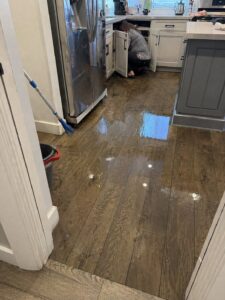
A family in the Heritage Hills neighborhood of Layton returned home from a weekend trip to find their kitchen soaked. A braided plastic ice maker supply line behind their refrigerator had developed a slow leak that went undetected for approximately 48 hours. Water had spread across 340 square feet of LVP flooring, migrated beneath the kitchen island, and reached the adjacent dining room where it was beginning to wick into the base of drywall along the exterior wall — prompting an emergency call for water damage restoration.
Upkeep was called Sunday evening. Our on-call crew arrived at 9:47 PM.
The Problem
The most significant complication was the LVP flooring. Despite being water-resistant on its surface, the locking seams had allowed water to migrate underneath the planks and sit against the subfloor for two days. Moisture readings at the subfloor showed elevated levels across the full affected area. The adhesive used under a portion of the floor had also trapped moisture, creating a hidden wet zone that wouldn’t have been visible without metering.
Additionally, the exterior wall drywall had begun absorbing moisture at the base, raising the risk of mold development if drying wasn’t initiated promptly. The Farmers claim was filed that evening and the adjuster was on-site the following morning.
What We Did
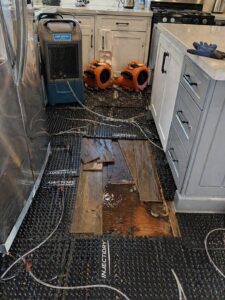
We extracted standing water and began thermal imaging to map the full moisture boundary, which extended 4 feet further into the dining room than the visible wet line suggested. Rather than pulling the LVP prematurely, we used a floor mat drying system with positive pressure to draw moisture up through the floor assembly, preserving the flooring where possible.
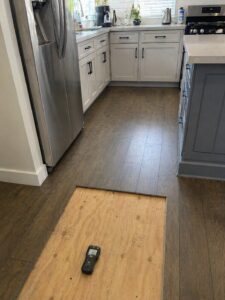
After 24 hours of mat drying with daily readings, it became clear that one 80-square-foot section in the center of the kitchen had retained moisture that was not dropping at an acceptable rate. That section of LVP was lifted, the subfloor was treated with an EPA-registered antimicrobial per IICRC S500 protocol, and drying continued with:
- 2 floor mat systems covering the perimeter areas
- 4 air movers directed at the open subfloor section and wall base
- 2 dehumidifiers running continuously
- Wall cavity drying panels on the exterior dining room wall
Final structural moisture readings on day 5 confirmed all materials had reached target drying goals.
The Outcome
Approximately 260 square feet of LVP flooring was saved. The 80-square-foot center section required replacement, and the base section of one dining room drywall panel was removed and rebuilt. Both were covered under the Farmers claim. The family was able to remain in the home throughout the drying process.
“Coming home to that was a nightmare. But the Upkeep team was calm, professional, and thorough. They saved most of our floors and walked us through every single decision they made. We felt taken care of.”
— T. and M. Calloway, Layton UT
We’ve handled similar appliance-related water losses throughout Davis County, including a washing machine overflow in Layton and a burst pipe with ceiling damage in Layton. Browse more of our case studies to see how we handle similar losses across the region.