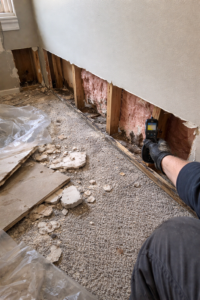
Drywall Repair After Water Damage in Layton, UT

Water-damaged drywall can compromise your home’s structure, appearance, and air quality. Whether from a burst pipe, flood, or roof leak, drywall absorbs moisture quickly—leading to swelling, staining, and mold risk. At Upkeep Water Damage Restoration, we offer complete drywall repair and replacement services in Layton, UT and surrounding areas.

Signs You Need Drywall Repair

  • Bulging, sagging, or soft drywall panels
  • Discoloration or water stains on walls or ceilings
  • Peeling paint or bubbling wallpaper
  • Mold growth on or inside the wall
  • Musty odors coming from walls

Our Drywall Repair Process

  1. Moisture Inspection: We identify water-damaged areas using moisture detection tools
  2. Drying & Dehumidification: We remove moisture with structural drying and dehumidifiers
  3. Drywall Removal: Severely damaged sections are safely removed
  4. Replacement & Repair: New drywall is installed, taped, mudded, and sanded
  5. Painting & Finishing: We match your wall’s texture and color

Why Prompt Drywall Repair Matters

  • Prevents mold and air quality issues
  • Restores structural safety and appearance
  • Ensures accurate insurance claims documentation
  • Protects against future moisture problems

Full-Service Water Damage Restoration

Drywall repair is just one part of our complete restoration services. We also offer:

Serving Layton & Neighboring Cities

Schedule Your Drywall Repair Today

Don’t leave damaged drywall untreated. Contact our team for fast inspection and repair. Check our water damage checklist or request emergency service 24/7.

Understanding Gypsum Board and Water Damage Vulnerability

Drywall, technically known as gypsum board or plasterboard, consists of a gypsum plaster core pressed between two thick sheets of paper. This composition makes it particularly vulnerable to water damage because gypsum is a hygroscopic material that readily absorbs moisture. When water infiltrates gypsum board, it compromises both the structural integrity of the gypsum core and creates an ideal environment for microbial growth between the paper facing and the plaster.

The calcium sulfate dihydrate composition of gypsum means that even after the visible water disappears, moisture can remain trapped within the material’s crystalline structure. This retained moisture continues to cause deterioration and provides ongoing conditions favorable to mold colonization, particularly species like Stachybotrys chartarum, commonly known as black mold, which thrives on the cellulose in drywall paper facing.

Understanding the hygroscopic nature of gypsum board is essential for proper water damage assessment. Materials that absorb and retain moisture require different restoration approaches than non-porous surfaces, and gypsum board often requires removal and replacement rather than simple drying when saturation exceeds certain thresholds.

Water Damage Categories and Classification Systems

Professional water damage restoration follows standardized classification systems developed by the Institute of Inspection Cleaning and Restoration Certification (IICRC). These systems provide a scientific framework for assessing damage severity and determining appropriate restoration protocols.

Water Damage Categories

The industry recognizes three distinct water damage categories based on contamination level:

  • Category 1 (Clean Water): Originates from sanitary sources like broken water supply lines, faucets, or rainwater that has not contacted contaminants. This water does not pose substantial health risks but can degrade to Category 2 if left untreated for 48 hours or more.
  • Category 2 (Gray Water): Contains significant contamination and potential health hazards. Sources include washing machine overflow, dishwasher leaks, toilet overflow with urine but no feces, or Category 1 water that has contacted building materials. May contain microorganisms and requires proper protective equipment during restoration.
  • Category 3 (Black Water): Grossly contaminated water containing pathogenic agents, toxins, and harmful bacteria. Sources include sewage backups, flooding from rivers or streams, toilet overflow with feces, and any Category 1 or 2 water that has remained stagnant for extended periods. Requires specialized remediation protocols and extensive safety measures.

Water Damage Classes

Beyond contamination categories, water damage is classified by evaporation rate and moisture absorption:

  • Class 1: Slow evaporation rate affecting only part of a room with minimal moisture absorption in materials. Least severe classification.
  • Class 2: Fast evaporation rate affecting at least an entire room with significant moisture wicking up walls (12-24 inches). Carpeting and cushioning are saturated.
  • Class 3: Fastest evaporation rate with water coming from overhead, affecting ceiling, walls, insulation, and flooring. Water may have migrated from upper floors.
  • Class 4: Specialty drying situations involving materials with very low permeance such as hardwood, plaster, concrete, and stone. Requires specialized equipment including desiccant dehumidifiers and extended drying times.

These classifications directly impact drywall repair strategies, as Category 3 water always requires complete removal of affected drywall, while Category 1 Class 1 damage may be repairable if addressed within 48 hours.

The Science of Psychrometrics in Water Damage Assessment

Psychrometrics is the study of the thermodynamic properties of gas-vapor mixtures, and it forms the scientific foundation for all professional water damage drying and restoration work. Understanding psychrometric principles allows restoration professionals to measure, monitor, and manipulate the conditions necessary for effective structural drying before drywall repair can begin.

Key psychrometric measurements include temperature, relative humidity, dew point, and grains per pound (GPP) of moisture. These measurements reveal not just surface moisture but the actual moisture content in the air and materials throughout the affected structure. Without proper psychrometric monitoring, hidden moisture can remain in wall cavities, insulation, and the building envelope, leading to ongoing deterioration and mold growth even after visible water has been removed.

Professional restoration technicians use psychrometric calculations to determine the specific dehumidification strategy needed. For example, refrigerant dehumidifiers work efficiently in warm, humid conditions typical of summer water damage, while desiccant dehumidifiers are essential for cold-weather restoration or when dealing with hygroscopic materials like gypsum board that continue releasing moisture even at low relative humidity levels.

The psychrometric chart becomes a roadmap for restoration, showing technicians exactly how much moisture must be removed from the air and at what rate, ensuring that structural drying reaches completion before repair work begins. This scientific approach prevents the common mistake of beginning drywall repair while hidden moisture remains, which leads to repair failure, ongoing mold growth, and recurring damage.

Professional Moisture Detection and Assessment Technology

Accurate moisture assessment requires specialized equipment that goes beyond visual inspection. Professional water damage restoration relies on multiple detection technologies to identify the full extent of damage and monitor drying progress.

Moisture Meters

Moisture meters are the primary diagnostic tool for measuring water content in building materials. Two types serve different purposes:

Pin-type meters use electrodes that penetrate the material surface to measure electrical resistance. Water increases conductivity, allowing the meter to calculate moisture content as a percentage. These meters provide highly accurate readings for the specific contact points but create small holes in the material. They excel at confirming moisture presence at specific locations and tracking drying progress at consistent measurement points.

Pinless (non-invasive) meters use electromagnetic waves to scan moisture levels up to three-quarters of an inch deep without damaging the material. While less precise than pin meters, they allow rapid scanning of large areas to identify moisture patterns and locate hidden water intrusion. Professional restoration teams use both types in combination for comprehensive assessment.

Thermal Imaging Cameras

Thermal imaging technology detects temperature differentials across surfaces, and since evaporating moisture creates cooling effects, these cameras reveal hidden water damage behind walls, above ceilings, and under flooring without destructive investigation. Wet areas appear as distinct temperature zones in the thermal image.

This non-invasive technology is particularly valuable for identifying moisture in wall cavities where gypsum board may appear dry on the surface while remaining saturated behind the paper facing. Thermal imaging guides strategic drywall removal, ensuring that all affected areas are addressed while minimizing unnecessary demolition of unaffected materials.

The combination of moisture meters and thermal imaging provides the complete assessment necessary to develop an effective restoration plan and determine which drywall sections require removal versus which can be dried and preserved.

Structural Drying and Dehumidification Protocols

Structural drying must be completed before any drywall repair work begins. This critical phase removes moisture from all building materials and the building envelope to prevent ongoing deterioration, mold growth, and repair failure.

Dehumidification Systems

Professional dehumidification uses industrial-grade equipment far more powerful than consumer models. Two primary technologies serve different conditions:

Refrigerant dehumidifiers work like air conditioners, cooling air below its dew point to condense moisture, then reheating the dried air before returning it to the space. These units operate efficiently in temperatures above 60°F and handle large volumes of air quickly. They are ideal for Category 1 and 2 water damage in climate-controlled structures during warm weather.

Desiccant dehumidifiers use moisture-absorbing materials to remove water vapor from air, operating effectively even in cold conditions and continuing to extract moisture at very low relative humidity levels. These specialized units are essential for Class 4 water damage involving hygroscopic materials like gypsum board, which continues releasing moisture even after refrigerant dehumidifiers reach their efficiency limits. They are also necessary for cold-weather restoration and unheated spaces.

Air Movement and Evaporation

Dehumidification alone is insufficient without proper air movement. Industrial air movers create rapid air circulation across all wet surfaces, accelerating evaporation by continuously replacing saturated air at the material surface with drier air. This forced evaporation dramatically reduces drying time from weeks to days.

Professional restoration establishes controlled drying chambers using plastic sheeting when necessary, concentrating dehumidification power in affected areas while preventing moisture migration to unaffected spaces. Continuous psychrometric monitoring ensures conditions remain optimal throughout the drying process.

Complete structural drying typically requires three to five days for standard water damage but may extend to two weeks for Class 4 conditions. Moisture readings must return to normal levels and remain stable for 24 hours before drywall repair begins, confirming that no hidden moisture reservoirs remain.

Mold Prevention and Remediation Standards

Water-damaged drywall creates optimal conditions for mold colonization, particularly for species like Stachybotrys chartarum (black mold) that thrives on cellulose-based materials. Mold growth can begin within 24 to 48 hours of water exposure, making rapid response essential.

The Environmental Protection Agency (EPA) provides authoritative guidance on mold remediation, emphasizing that the key to mold prevention is moisture control. The EPA’s position is clear: if you eliminate moisture, you eliminate the conditions necessary for mold growth. This principle underlies all professional water damage restoration protocols.

When Drywall Must Be Removed

The IICRC standards specify clear thresholds for drywall removal versus restoration:

  • All Category 3 (black water) contaminated drywall must be removed regardless of drying potential
  • Gypsum board saturated for more than 48 hours typically requires removal due to likely mold colonization
  • Drywall with visible mold growth must be removed, as surface cleaning does not address mold within the material structure
  • Paper-faced drywall wicking moisture more than 12 inches above the water line generally requires removal
  • Any drywall that has lost structural integrity or shows delamination must be replaced

EPA Remediation Protocols

When mold is present, the EPA recommends containment procedures to prevent spore distribution throughout the structure during removal. This includes sealing off work areas with plastic sheeting, using negative air pressure with HEPA filtration, and following proper disposal procedures for contaminated materials.

For small areas (less than 10 square feet), property owners may conduct remediation following EPA guidelines. However, extensive contamination, Stachybotrys chartarum presence, or damage from Category 3 water requires professional remediation by IICRC-certified technicians with proper training, equipment, and safety protocols.

The EPA emphasizes that cleaning mold-contaminated porous materials like gypsum board is generally not effective or recommended. The porous nature and cellulose paper facing mean that mold penetrates deep into the material where cleaning solutions cannot reach. Removal and replacement remain the only reliable remediation approach for mold-contaminated drywall.

Professional Drywall Repair Materials and Techniques

Once structural drying is complete and any mold remediation has been performed, proper drywall repair requires specific materials and proven techniques to ensure lasting results that match existing wall surfaces.

Gypsum Board Selection

Standard paper-faced gypsum board may not be appropriate for water damage repairs in areas with elevated moisture risk. Professional restoration often specifies moisture-resistant drywall products:

  • Green board features moisture-resistant paper facing for areas with moderate humidity exposure
  • Purple board provides enhanced moisture and mold resistance suitable for bathrooms and areas with previous water damage
  • Paperless drywall eliminates the cellulose paper facing that molds feed on, using fiberglass mat facings instead for maximum moisture and mold resistance

The choice depends on the water damage category, location within the structure, and likelihood of future moisture exposure. Areas that experienced Category 2 or 3 water damage often benefit from upgraded moisture-resistant products even after thorough remediation.

Joint Compound Application

Joint compound, also called drywall mud, serves multiple functions in repair: securing joint tape at seams, filling fastener dimples, and creating smooth transitions between new and existing surfaces. Professional application follows a multi-coat process:

The first coat embeds paper or fiberglass mesh tape over joints and applies a thin layer over fastener heads. This coat bonds materials together but appears rough and uneven. After drying for 24 hours, the surface is lightly sanded to remove high spots and ridges.

The second coat applies a wider layer extending several inches beyond the first coat, beginning to feather edges and create smooth transitions. This coat may also fill any remaining fastener dimples and address surface imperfections. After drying and light sanding, the surface should appear nearly flush with surrounding drywall.

The final coat creates the finished surface, feathering edges outward to create imperceptible transitions. Professional finishers often extend this coat 12 to 16 inches beyond the repair area, ensuring that texture and level changes are undetectable even under raking light. After complete drying, final sanding with fine-grit paper prepares the surface for priming and painting.

Vapor Barrier Restoration

In climate zones requiring vapor barriers within wall assemblies, water damage repair must restore this critical building envelope component. The vapor barrier controls moisture migration through walls, preventing condensation within wall cavities that could lead to mold growth and structural deterioration.

When drywall removal exposes damaged vapor barrier material, the barrier must be repaired or replaced before installing new gypsum board. Tears or holes are sealed with specialized vapor barrier tape, and missing sections are replaced with new polyethylene sheeting or appropriate vapor retarder material meeting local building codes.

Failure to properly restore the vapor barrier creates ongoing moisture management problems within the wall assembly, potentially leading to recurring damage even after professional repair. This building science principle is particularly important in cold climates where interior moisture drives toward cold exterior surfaces during heating season.

IICRC Certification and Professional Standards

The Institute of Inspection Cleaning and Restoration Certification (IICRC) establishes and maintains the authoritative standards for the water damage restoration and structural drying industry. This non-profit organization develops science-based standards through consensus among industry experts, ensuring that restoration protocols reflect current best practices and technological advances.

IICRC certification requires restoration technicians to complete comprehensive training in water damage restoration science, including psychrometrics, microbial remediation, structural drying, and proper equipment use. Certified technicians must pass rigorous examinations demonstrating their understanding of these principles and commit to ongoing education to maintain their credentials.

Key IICRC Standards for Water Damage

The IICRC S500 Standard and Reference Guide for Professional Water Damage Restoration provides the industry benchmark for assessment, classification, and restoration procedures. This standard establishes:

  • Water damage categorization protocols (Categories 1, 2, and 3)
  • Classification systems based on evaporation rates (Classes 1-4)
  • Psychrometric monitoring requirements
  • Structural drying timelines and completion criteria
  • Documentation and photographic evidence standards
  • Safety protocols for restoration technicians

Insurance companies, property managers, and building owners increasingly require IICRC certification as a prerequisite for water damage restoration contracts. This certification provides assurance that restoration work follows scientific principles rather than guesswork, reducing liability and ensuring proper restoration that prevents recurring problems.

The Value of IICRC Certification for Property Owners

Choosing an IICRC-certified restoration company provides multiple advantages for property owners facing water damage. Certified firms use standardized assessment methods that accurately determine the full extent of damage, preventing both under-remediation that leaves hidden moisture and over-remediation that removes more material than necessary.

Certified technicians understand the science of structural drying and use psychrometric monitoring to verify complete moisture removal before repair work begins. This approach prevents common problems where cosmetic repairs are completed while hidden moisture remains, leading to mold growth and repair failure weeks or months later.

Documentation produced by IICRC-certified firms also facilitates insurance claims by providing standardized evidence of damage extent and restoration necessity. Insurance adjusters recognize IICRC protocols as industry standard, reducing disputes about scope of work and appropriate restoration procedures.

Understanding Drywall Materials and Water Damage

Drywall, composed primarily of gypsum (calcium sulfate dihydrate) sandwiched between layers of paper facing, is particularly vulnerable to water intrusion. The gypsum core can absorb significant moisture, while the paper facing provides an ideal food source for mold growth. When water damage occurs, understanding these material properties helps determine whether repairs or full replacement are necessary.

Professional restoration technicians use moisture meters to measure water content throughout affected drywall sections. These readings, combined with thermal imaging technology, reveal hidden moisture pockets that aren’t visible to the naked eye. This diagnostic approach follows IICRC (Institute of Inspection Cleaning and Restoration Certification) standards for water damage assessment and ensures no moisture remains trapped within wall cavities.

Water Contamination Categories and Restoration Protocols

The water damage restoration industry classifies water intrusion into three categories that directly impact drywall repair decisions. Category 1 water originates from sanitary sources like supply lines, Category 2 water contains contaminants like washing machine overflow, and Category 3 water is grossly contaminated, such as sewage backups or flooding. According to EPA guidelines, Category 3 water damage typically requires complete drywall removal rather than drying attempts, as the contamination poses serious health risks.

Understanding these classifications is essential for insurance claim documentation. Adjusters require detailed moisture readings, photographic evidence from thermal scans, and documentation of water category to approve claims for drywall replacement versus simple drying services.

Professional Drying and Dehumidification

When drywall can be salvaged, professional-grade equipment makes the difference between successful restoration and future problems. Desiccant dehumidification systems remove moisture from the air more effectively than conventional dehumidifiers, particularly in cooler conditions. Technicians monitor humidity levels throughout the drying process, understanding that capillary action can draw moisture upward through porous materials even after surface water disappears.

Professional teams reference psychrometric charts to calculate the precise drying capacity needed based on temperature, humidity, and material saturation levels. This scientific approach ensures the structural framing behind drywall—typically wood studs—dries completely to prevent rot and deterioration.

Mold Prevention and Remediation

Within 24-48 hours of water exposure, mold spores begin colonizing wet drywall. The most concerning species is Stachybotrys chartarum, commonly called black mold, which produces mycotoxins linked to respiratory problems. When removing water-damaged drywall, professionals establish containment barriers and use HEPA filtration systems to capture airborne mold spores and prevent cross-contamination to unaffected areas.

After removing compromised materials, restoration teams apply antimicrobial treatment to exposed framing and surfaces. This critical step prevents mold regrowth on materials that will be enclosed behind new drywall. The antimicrobial barrier remains active for extended periods, providing ongoing protection against moisture-loving organisms.

Complete Restoration and Quality Assurance

Professional drywall repair after water damage involves more than simply hanging new panels. Technicians verify that humidity levels have returned to normal ranges, that structural framing shows no signs of damage, and that all antimicrobial treatments have been properly applied. Final moisture meter readings are documented for insurance purposes and to provide homeowners with verification that restoration work meets industry standards.

By following established protocols from organizations like the IICRC and EPA, professional restoration companies ensure that repaired areas will perform as well as original construction, with no lingering moisture issues or health hazards.

Frequently Asked Questions – Drywall Repair After Water Damage in Layton, UT

Do you offer 24/7 emergency drywall repair after water damage in Layton, UT?

Yes, we provide 24/7 emergency drywall repair services for water damage in Layton, Utah. Our emergency response team is available around the clock to prevent further damage and begin immediate drywall assessment and repairs.

Water damage requires urgent attention within 24-48 hours to prevent:

  • Mold growth behind drywall
  • Structural deterioration
  • Increased repair costs
  • Health hazards

What is your response time for water damage drywall repair in Layton, UT?

Our water damage drywall repair team responds within 60-90 minutes to emergency calls in Layton, Utah and surrounding Davis County areas.

Response timeframes:

  • Emergency calls: 60-90 minutes
  • Non-emergency appointments: 4-6 hours during business hours
  • Assessment completion: Within 2-4 hours of arrival

Quick response time is critical for minimizing water damage to drywall and preventing secondary issues.

Do you work with insurance adjusters for water damage drywall repairs in Layton?

Yes, we work directly with insurance adjusters and all major insurance companies for water damage drywall repairs in Layton, UT.

Our insurance coordination includes:

  • Detailed documentation and photos
  • Comprehensive estimates meeting insurance requirements
  • Direct communication with adjusters
  • Paperwork handling and claim coordination
  • Streamlined approval process

Are you licensed and certified for drywall repair after water damage in Utah?

Yes, we are fully licensed contractors in Utah with specialized certifications in water damage restoration and drywall repair.

Our credentials include:

  • IICRC certification for water damage restoration
  • Utah contractor’s license (current and verified)
  • Comprehensive liability insurance
  • Bonded and insured for your protection

All certifications are current and available for verification upon request.

What does drywall repair after water damage cost in Layton, UT?

Water damage drywall repair costs in Layton, UT typically range:

  • Minor repairs: $300-800
  • Moderate damage: $800-1,500
  • Extensive damage: $1,200-3,500

Cost factors include:

  • Size of damaged area
  • Extent of water penetration
  • Mold remediation requirements
  • Material replacement needs
  • Structural repairs required

We provide free estimates and work with insurance to minimize your out-of-pocket expenses.